
What Is TMJ?
Understanding the Temporomandibular Joint
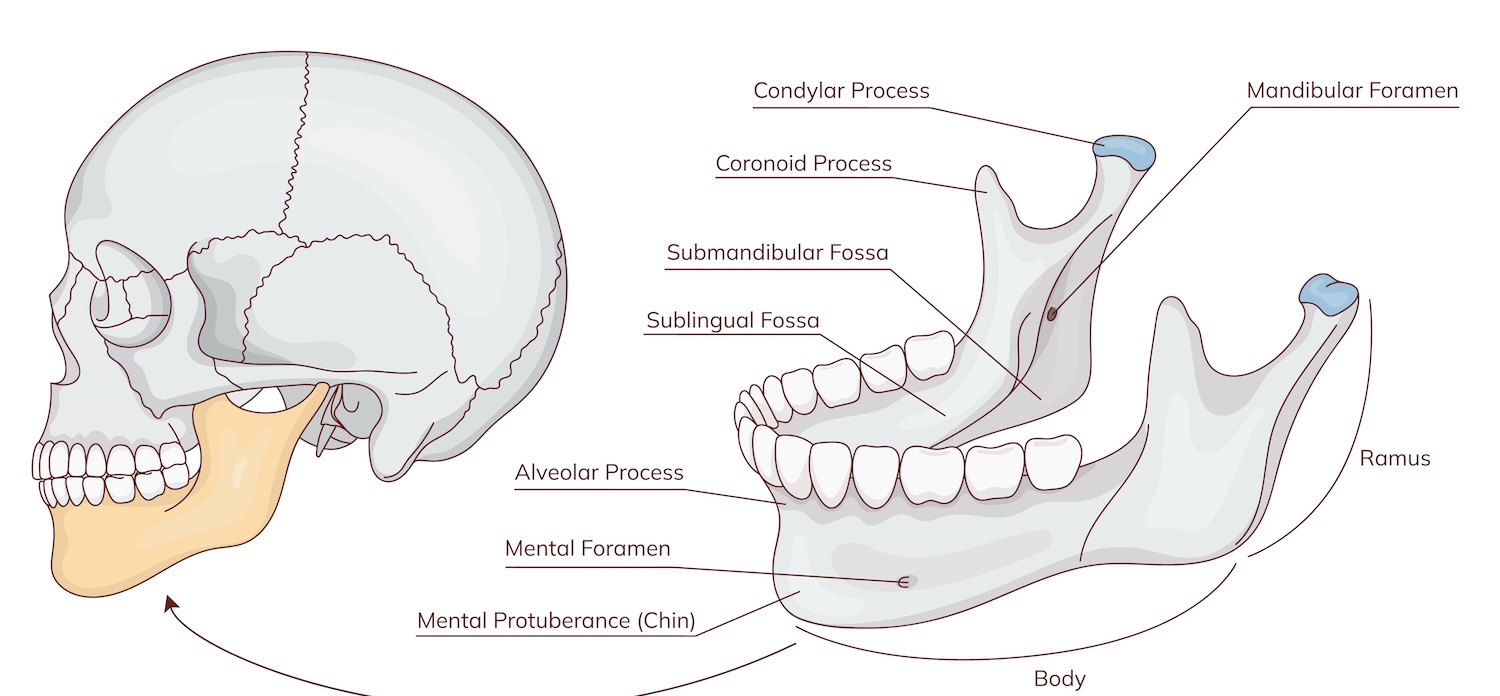
TMJ stands for Temporomandibular Joint. As touched upon on our homepage each of us have two temporomandibular joints, one either side of our head, They are located just in front of our ears. They connect your lower jaw (mandible) to the temporal bone of your skull. They are among the most complex and most used joints in our bodies. Every single time we eat, speak, swallow, yawn, smile or sing, our TMJs are working away.
When our TMJ's are functioning properly, these joints move smoothly, quietly and without any discomfort. When dysfunction happens, even simple daily actions like chewing can become a source of pain and a feeling of restriction.
Why Is the TMJ So Important?
Unlike many joints in the body, the TMJ has to:
- Hinge open and closed as required
- Slide forwards and backwards
- Move side to side
- Work in perfect harmony and coordination on both sides
It must also work seamlessly in tandem with:
- Our chewing muscles
- Our bite alignment (how our teeth meet top and bottom)
- Our facial nerves
- Our neck and shoulder muscles
Because of the vast complexities, little imbalances can sometimes throw off the synergy and alignment.
How a Healthy TMJ Moves
A strong, healthy, properly functioning TMJ doesn't just operate as a “hinge.”
As you open your mouth, four types of action take place;
- The joint rotates slightly.
- The disc moves smoothly with the jaw.
- The joint then glides forward.
- Both sides work in perfect harmony.
If either side moves differently from the other, this is where strain can happen and, over time, this type of constant strain can adversely affect the joint itself, surrounding muscles, disk and bite.

What Happens When the TMJ Does Not Function Properly?
When the joint becomes overburdened, aggravated or misaligned, the condition has the capacity to progress to what is commonly referred to as TMD (Temporomandibular Dysfunction).
Typical mechanical issues that can occur include:
- Disc displacement
- Muscle overactivity
- Joint inflammation
- Bite imbalance
- Arthritic change
These issues can result in symptoms such as:
- Jaw pain
- Clicking or popping
- Limited opening
- Headaches
- Ear symptoms
- Facial tension
We take a closer look at these symptoms in detail on our TMJ Symptoms page.
Is TMJ the Same as TMD?
No, they are not exactly the same in that TMJ refers to the actual joint whereas TMD refers to dysfunction affecting the joint and its surrounding structures. However, the term “TMJ” is regularly used to describe the condition. For example, if someone were to say they are suffering from TMJ, what they usually mean is they are experiencing symptoms of TMD
Are TMJ Problems Common?
TMJ dysfunction is probably a lot more common than most people realise. Evidence suggests that it is more prominent amongst 20 to 40 year olds. It is also more common in women than it is in men. Many mild cases go without ever being diagnosed at all while, in some chronic cases, symptoms can exist for years without ever being properly diagnosed. This is likely because symptoms of TMJ problems can mimic those of sinus issues, ear infections, neck issues and even migraine headaches. People can find themselves getting treatment for these other issues before discovering that TMJ is the underlying cause
When Should You Seek Professional Help?
You should consider having an assessment if you are experiencing any of the following:
- Persistent jaw discomfort
- Recurrent clicking of the jaw accompanied with pain
- Difficulty opening your mouth fully
- Getting a lot of unexplained headaches
- Ear pain without infection
- Jaw locking
- Facial fatigue
Early evaluation is key for the patient as it can, in many instances, prevent further progression.
Why Proper Understanding Matters
Although the temporomandibular joint is quite small it plays a big role in your daily comfort. This is because it interacts with your teeth, facial muscles and nerves.
To devise a treatment plan we need to conduct a full analysis of how your TMJ issues are affecting you. At both our TMJ Clinics in Waterford and Kilkenny we believe understanding the joint is the first step towards finding stability and relief for the long term.
Take the First Step Towards Relief
Chronic jaw pain and facial tension can affect your overall quality of sleep, work and wellbeing. You don't have to continue living with it!
Book a comprehensive TMJ consultation with us today and start your journey toward a lasting improvement.
To Request a Consultation Simply Fill In The Form Below